- LATHE TOOL RACK -
The exact dimensions of the rack are going to depend on your needs and the tools you wish to store in it. For me I built it big enough for the tools I have, and allowed room for me to grow as I add tools to my wood turning collection. But for this reason I do not go in to any exact measurements and give more of an over view of how I built this rack hopefully giving you enough information to build one yourself.
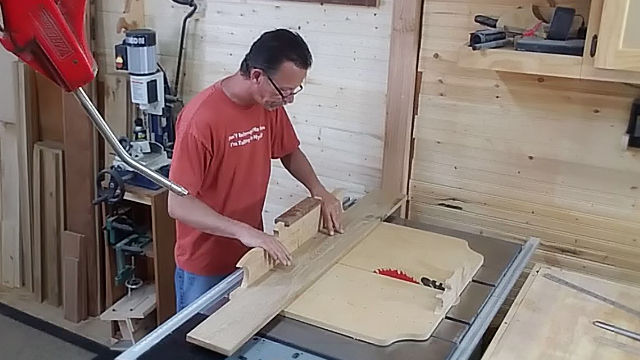
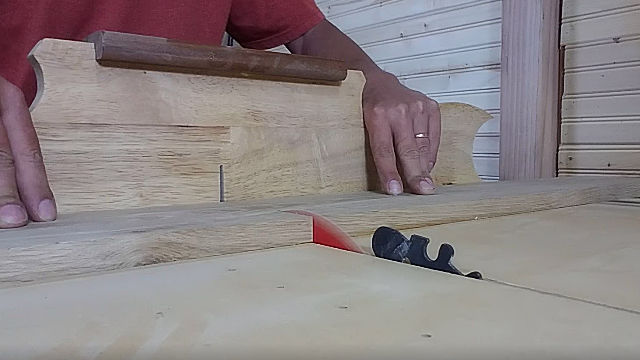
I started out by cutting all the parts that will make up the case. For this I used 3/4" oak and I needed two pieces at 25" long and three at 27" long all of these are 5 1/2" wide except for the one that is for the top of the rack and it is 1 1/2" wide.
|
|
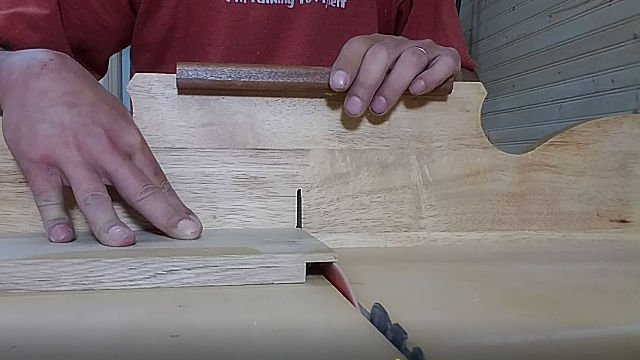
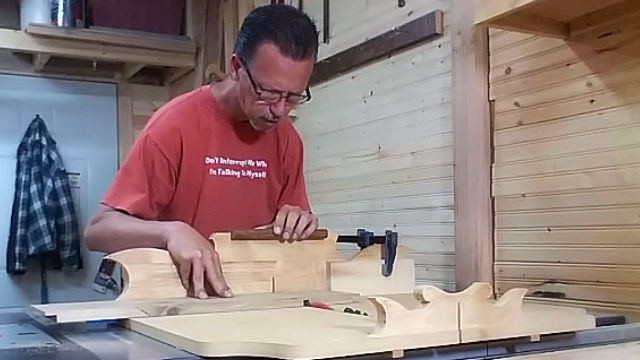
Next I cut a rabbet at both ends of the two boards that are 25" long these are the boards that will make up the sides of the case. With all four rabbets cuts I then cut one groove in both of these boards about 4" away from the top of the rabbet that will accept the top shelf of the rack at assembly.
|
|
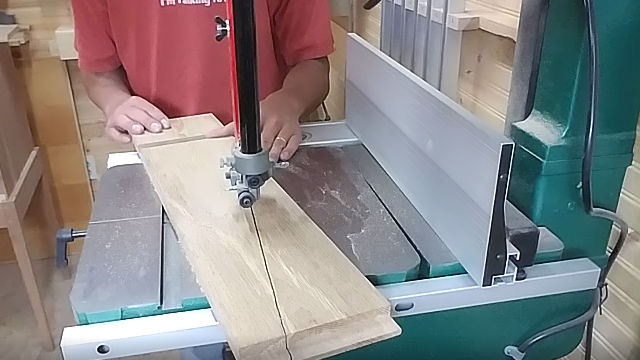
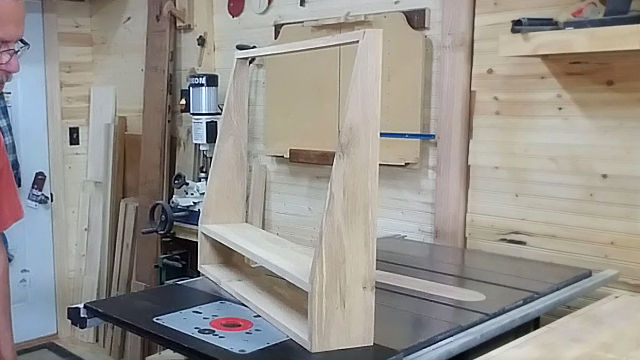
With the joinery cut for the case I then cut a tapper in the two boards that will make up the sides of the case. I cut this tapper on my band saw starting about 1/2" above the groove for the shelf going straight to the top of the case exiting about 1 1/4" away from what will be the back side of the case. Then after a few passes with a hand plane and some sandpaper I was able to do a test fit and make sure everything was going together okay.
|
|
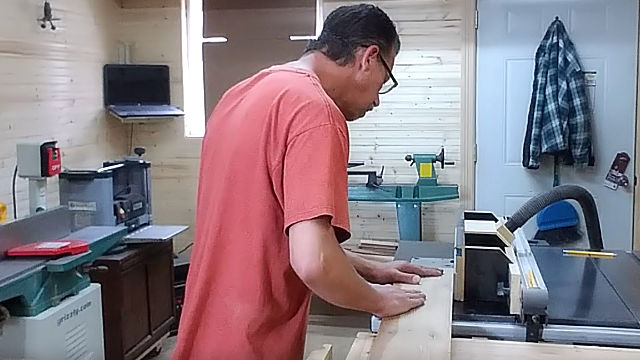
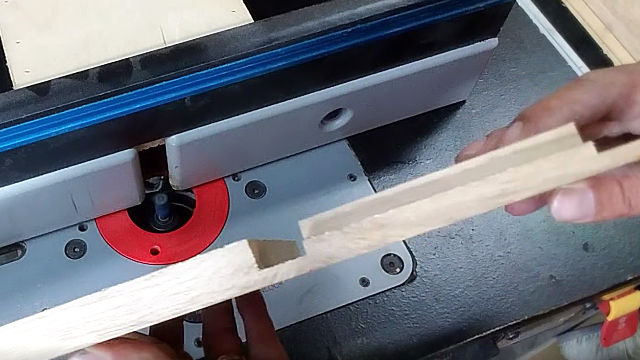
The last thing I needed to do was cut a rabbet to accept an insert panel at the bottom of the shelf opening at the back side of the case. The rabbet runs the full length of the both boards that make up the top and bottom of the shelf opening, but only from the groove to the rabbet at the bottom of both side pieces.
|
|
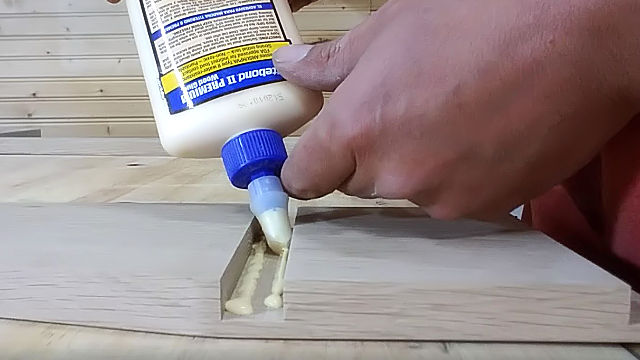
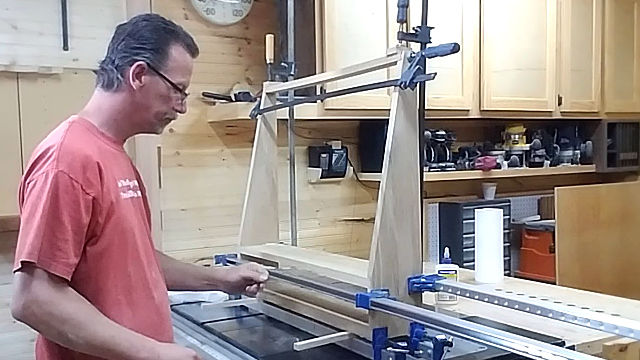
At this point I glued the case assembly together, applying glue in the rabbets and the groves then clamping it all together. I let it sit in the clamps over night for the glue to dry.
|
|
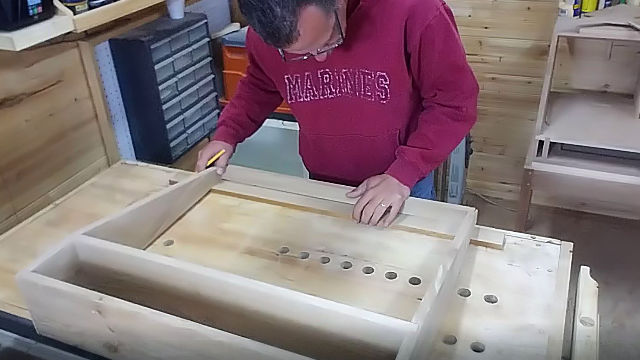
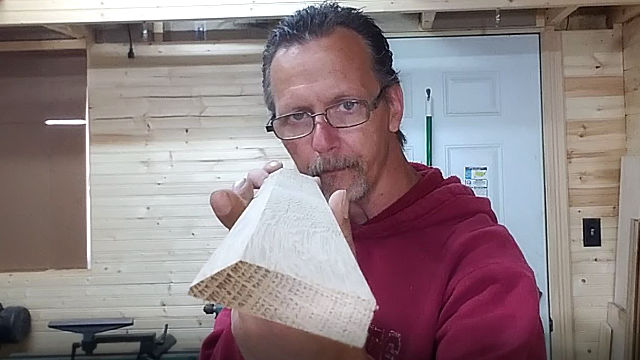
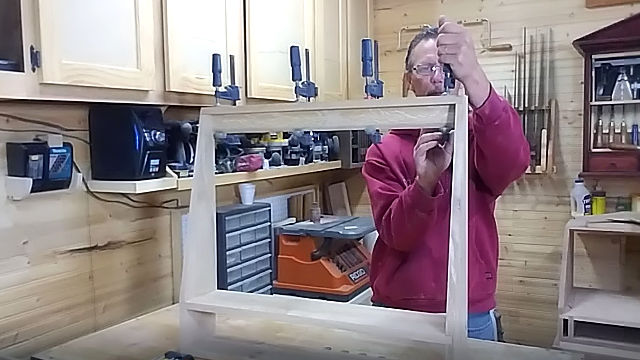
The next day after I took it out of the clamps I knew I had three things I needed to figure out. One, I needed to make the top of the cabinet stronger. Two, I needed a way to attach an insert panel at the top of the inside of this cabinet. Three, I needed a way to hang the cabinet on the wall. So what I did was to cut a piece of 1/2 " thick oak to the length of the inside of the cabinet from one side to the other. My thought was if I glue this to the back of the cabinet to the top board it would create a "L" type of bracket that would not only give the cabinet the strength I wanted, but it would also give me a mount for my insert panel. And to hang the cabinet I decided to use a french cleat, so I also cut a 45 on the one edge of the board for this then glued it in and let it sit for a couple of hours to allow the glue time to set up.
|
|
|
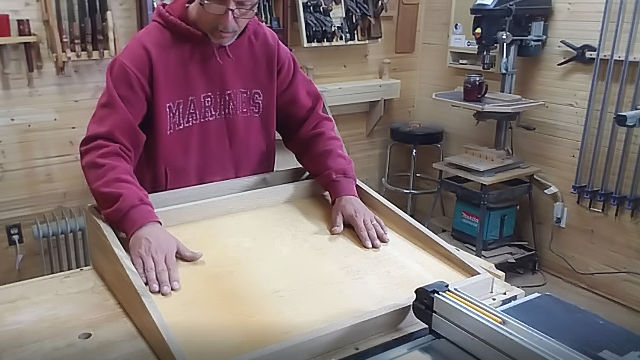
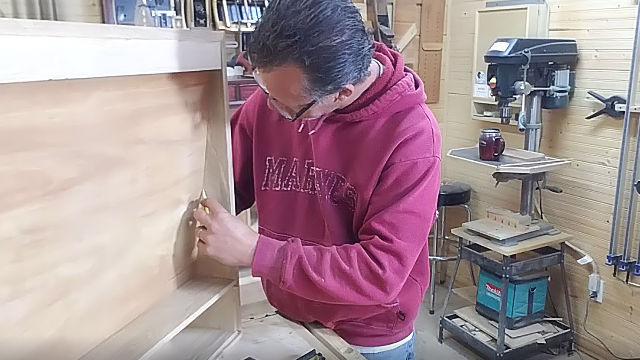
Next was my insert panel, I cut this out of a piece of 1/4" material. But when I cut this I cut it so that it was the correct width to fit inside the cabinet, but it was to long. If this piece is cut to long when you place it in at the top, the bottom will not settle all the way in to the case causing it to sit at angle and with a couple of cuts removing just a little material at a time you can get it to follows the angle cut on the outsides of the case. Once I had the insert cut I tipped the cabinet up and using a pencil I drew line where the insert meets the sides of the case.
|
|
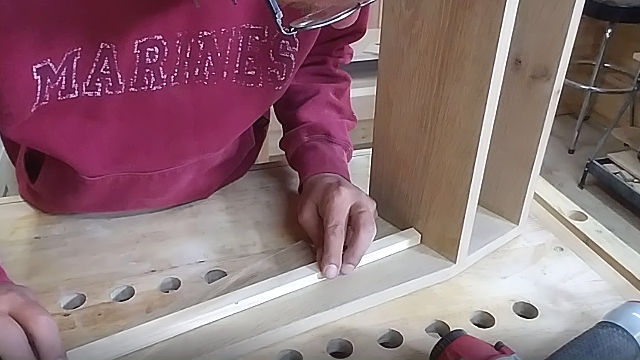
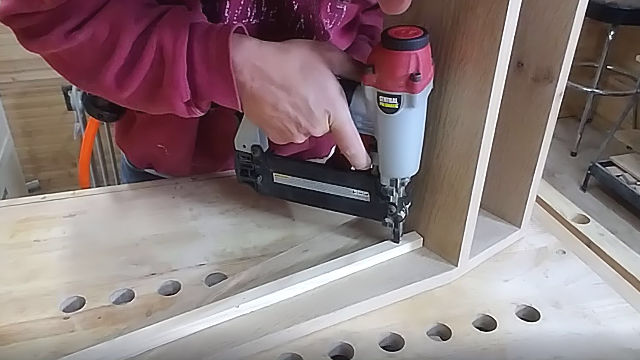
With my pencil line established I attached a 1" by 1" strip to the back side of the my line with glue and a few brad nails.
|
|
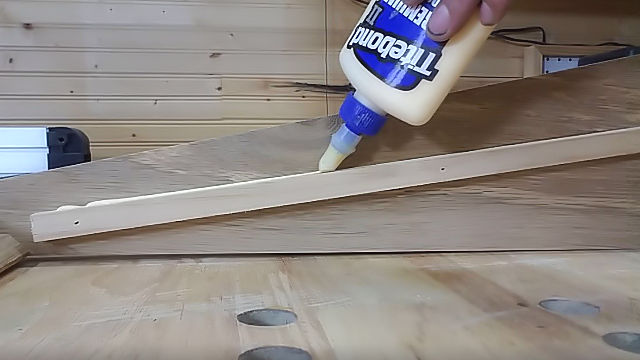
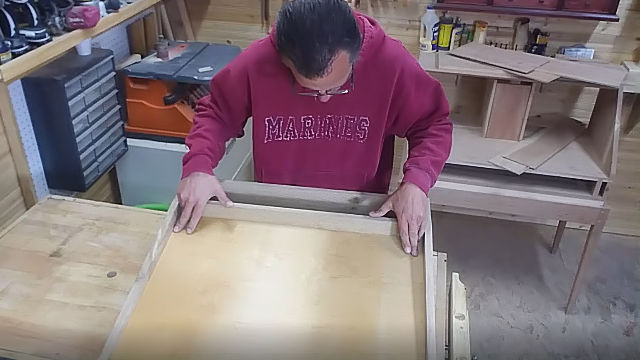
Then with glue applied to the strips I attached the insert panel, I also used some pin nails to hold everything until the glue dries.
|
|
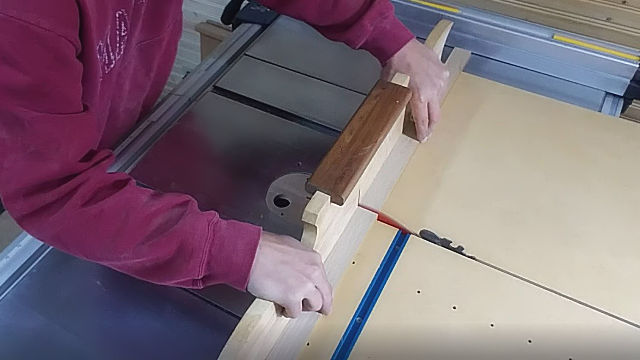
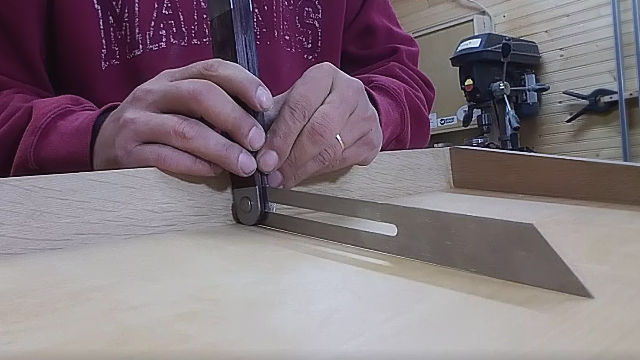
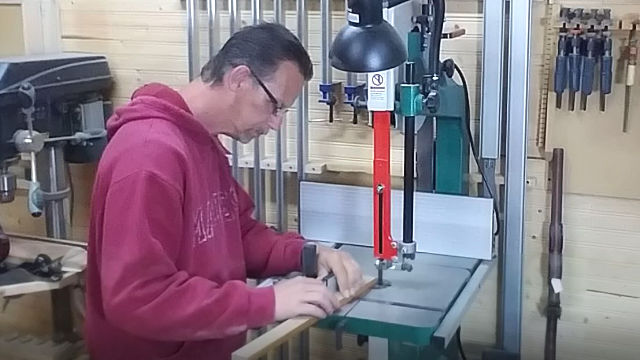
Next I started working on the dividers for the tools, cutting these out of a piece of 1/2" oak. For the dividers to sit flush at the bottom of the cabinet I needed to find the angle going from the insert panel to the bottom of the cabinet and once I had that I set the miter gauge on my band saw to this angle then cut the bottoms of dividers.
|
|
|
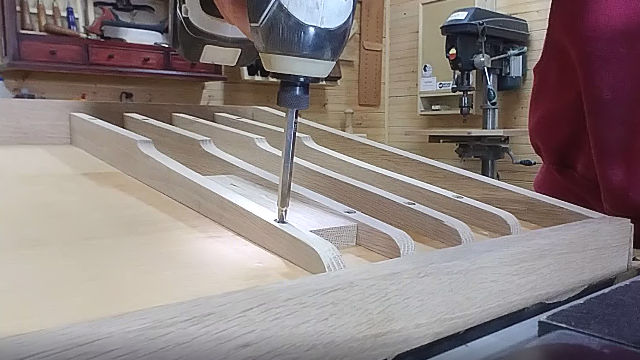
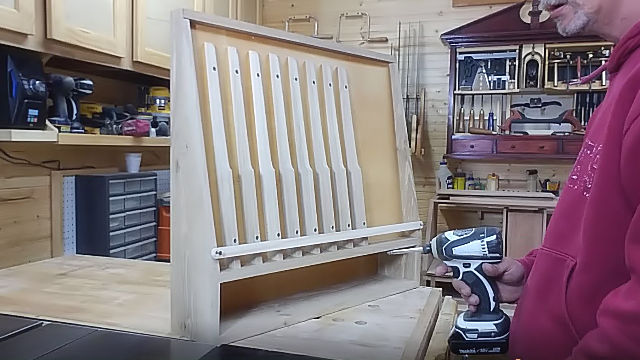
I spent sometime shaping the dividers then drilled counter sunk holes and screwed them in. Using a spacer block as I installed them to ensure squareness and spacing. I did not glue these in because I wanted the option of being able to adjust them down the road as my tools might change.

|
|
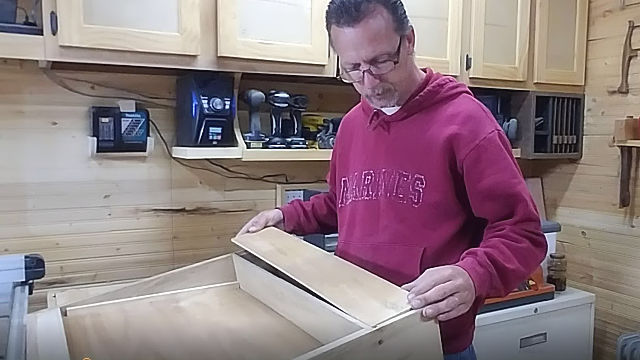
The last thing to do was install the insert panel on the back side at the bottom of the cabinet into the recess created from the rabbets I cut earlier at the router table, I installed this with glue and brads. Then I screwed in a runner to the bottom front of the cabinet to act as a catch to help hold the tools in the rack.
|
|
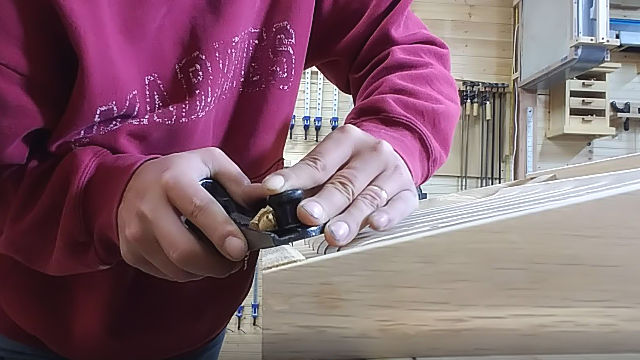
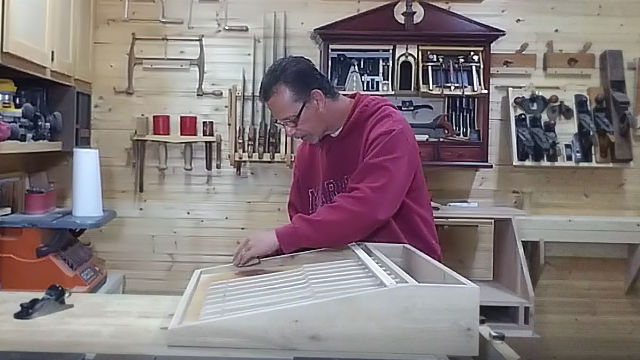
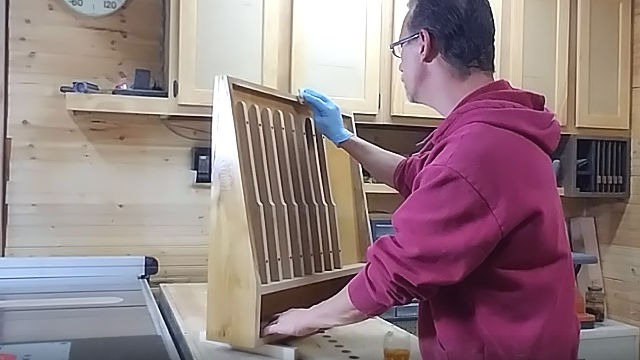
I used my block plane to flush the top of the cabinet to the sides. Then it was a lot of sanding going through the grits finishing with a 320 grit. For a finish I used a wipe on polyurethane applying five coats with sanding in between coats.
|
|
|
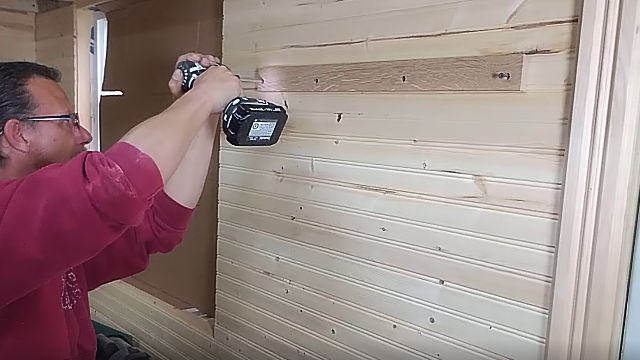
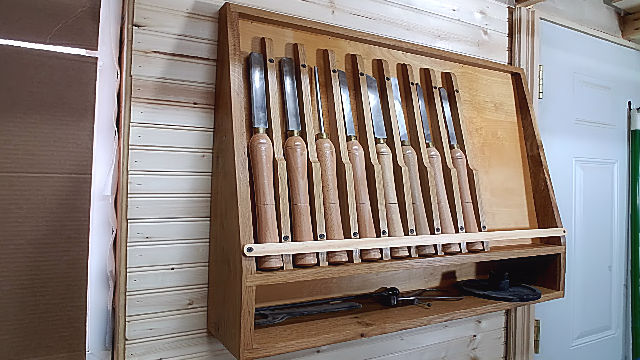
Then it was just a matter of screwing the other half of the french cleat to the wall, setting the rack on it and putting all my tools in it. I really like the look of this rack and I'm sure it will serve my shop well for many years to come.
|

|
|

